
Lessons in Love
Play Lessons in Love
Lessons in Love Screenshots





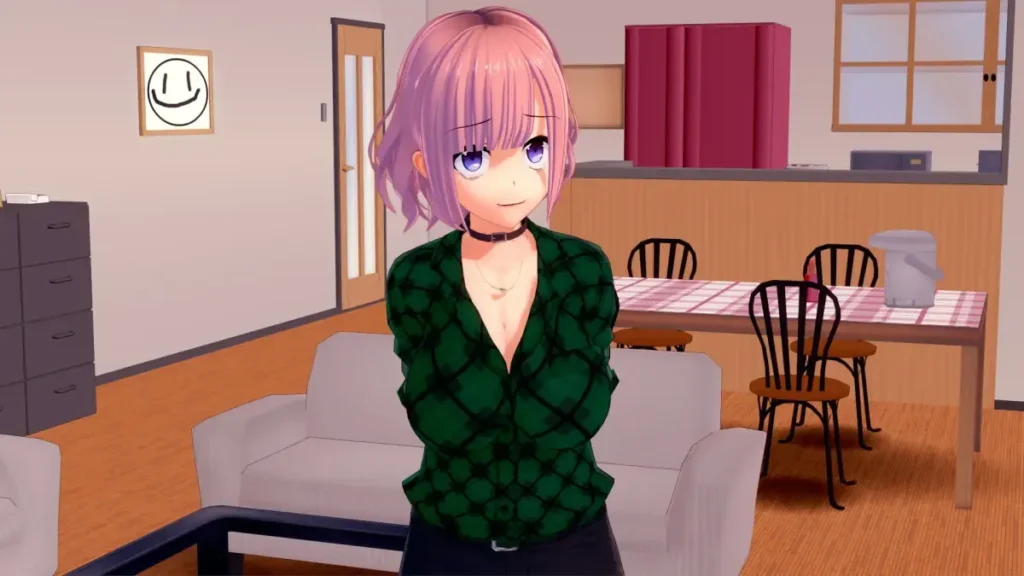











Lessons in Love review
Master the Choices, Events, and Secrets in This Gripping Visual Novel
Ever stepped into a world where your every choice reshapes reality, blending steamy encounters with mind-bending supernatural twists? That’s Lessons in Love for you—a visual novel that hooked me from the first eerie awakening in Kumon-mi. As Sensei, a teacher with a mysterious past and endless cravings, you navigate daily locations, build affection with a cast of captivating girls, and unlock events that spiral into horror, faith, and passion. I remember my first playthrough: one wrong dialogue option locked me out of Yumi’s path, teaching me the game’s brutal consequences. Dive in with me as we unpack strategies to conquer Lessons in Love, from core mechanics to hidden routes that keep you coming back.
How Lessons in Love Gameplay Hooks You In
I still remember my first major mistake in Lessons in Love gameplay. 😅 It was early on, and I encountered Yumi, the quiet, reserved student. The game presented me with a choice: to gently ask about her day or to pry into her personal life. Thinking I was being a diligent “Sensei,” I chose to dig deeper. Big mistake. The screen flashed, her expression shifted from neutral to visibly frightened, and a notification chimed—I had just permanently altered my relationship path with her. It was a brutal introduction to how Lessons in Love choices carry real, lasting weight. This isn’t a game where you can reload and try every option; your decisions etch themselves into the story’s DNA.
This moment perfectly encapsulates the visual novel mechanics at play. At its core, Lessons in Love gameplay is a masterclass in consequence. You navigate each in-game day, choosing which locations to visit and which of the dozens of characters to interact with. But every conversation is a potential branch in the road. A careless comment can shut down a storyline, while genuine attention can unlock profound, often unsettling, intimacy. The game’s systems are deceptively simple on the surface, yet they hide immense depth beneath, hooking you with the terrifying and thrilling power of your own agency.
What Makes Daily Choices Game-Changing?
The daily structure is the heartbeat of Lessons in Love. You wake up, check your stats, and plan your route through the city. Will you visit the library to find Makoto, or swing by the pool to see Ami? This isn’t just busywork. Each location holds characters at specific times, and interacting with them is the primary engine for raising their affection levels in Lessons in Love.
But here’s the catch: time is limited, and characters remember everything. 😰 Choosing to spend the afternoon with one student means not spending it with another, which can subtly affect their feelings. More importantly, the dialogue choices you make during these visits are the true game-changers. They range from benign small talk to deeply invasive or emotionally charged questions. The game rarely signposts which is which. A supportive comment might build trust, while an offhand joke could be perceived as cruel, freezing a character’s affection in its tracks. This creates a constant, low-level tension that makes every click feel significant, knowing you’re actively building—or burning—bridges with a cast of complex, reactive personalities.
Building Affection: Tips for Unlocking Events
This is where the magic—and the strategy—happens. Affection levels in Lessons in Love are the numerical gatekeepers to the game’s rich content. Think of them as a measure of a character’s trust and closeness with you, the protagonist Sensei. As these levels increase, new dialogue options become available, and, crucially, Lessons in Love events are triggered.
These events are the story’s major beats: private conversations, surreal dream sequences, intimate moments, and terrifying revelations. How to unlock events in Lessons in Love boils down to two things: consistently raising the right affection levels and being in the right place at the right time. Some events require a specific character to be at a Love stat of 25, others 50, and some need multiple characters at certain thresholds simultaneously. The game doesn’t hold your hand, making a personal log or guide essential for dedicated players.
Here’s a basic look at how these thresholds can work:
| Affection Level Range | Relationship Stage | Example of Events Unlocked |
|---|---|---|
| Love 1-10 | Acquaintance | Basic daily interactions, introductory story beats. |
| Love 11-30 | Growing Closeness | Personal conversations begin, minor secrets are shared, first unique scenes. |
| Love 31-60 | Deep Bond / Unsettling Intimacy | Major character-focused events, access to personal spaces, surreal or horror-tinged sequences trigger. |
| Love 61+ | Transcendent Connection | Story-critical revelations, endings become accessible, reality-bending plot advances. |
My actionable advice? Prioritize and track. Early on, focus on a handful of characters that intrigue you. Use the in-game stat screen (the “T” key is your friend!) to monitor progress. If you’re aiming for a specific event mentioned in a community guide, reverse-engineer your days to target the required affection. Remember, Lessons in Love events often chain into one another; unlocking one might create a prerequisite for another, weaving a complex web of narrative progression that is deeply satisfying to unravel. 🧩
Navigating the Supernatural Plot Twists
If you start Lessons in Love gameplay thinking it’s a simple dating sim, the plot twists will recalibrate your expectations violently. 😨 The initial fan-service veneer is a trap—a comforting layer of anime charm that gets violently peeled back. This art-style dissonance is intentional: one moment you’re in a bright, cheerful classroom, and the next, you’re confronted with grotesque, horrifying visuals that sear themselves into your memory.
The narrative shift is from mundane (if messy) personal relationships to a cosmic, often terrifying, metaphysical drama. Entities like Callous, Calm, and Concerned—strange gods observing or manipulating the world—become central figures. The students themselves are entangled in a lore that involves existential repetition, memory wiping, and apocalyptic scenarios. Lessons in Love plot twists aren’t just “oh, she was a ghost” moments; they are foundational shifts that recontextualize every conversation and choice you’ve made up to that point. Did you build affection with that character because you liked them, or because a subconscious, god-like force was guiding you toward a predetermined end?
This is where Sensei’s own evolution is key. You begin as a vessel of base impulse, but your choices can slowly reshape his personality. Will you reinforce his lust-driven nature, or guide him toward something resembling care or even redemption? The game’s deepest secrets and endings are locked behind not just high affection levels, but specific narrative choices that reflect this internal struggle. Unlocking the truth of the world often requires embracing its darkness.
Storytelling Tip: The true scope of Lessons in Love is only visible across multiple playthroughs. Replaying with different priorities reveals alternate outcomes, hidden dialogue, and entirely new scenes that piece together the puzzle of its world. A choice that led to fear in one save might lead to breakthrough in another.
Ultimately, Lessons in Love gameplay succeeds because it makes you complicit. You’re not just watching a story about obsession and cosmic horror; you’re actively participating in building the relationships that make the inevitable twists so devastating and compelling. It hooks you with the addicting loop of raising stats and unlocking events, only to reveal that you were weaving the ropes of a narrative noose all along. It’s a brilliant, uncomfortable, and utterly unforgettable experience.
FAQ: Your Lessons in Love Gameplay Questions
What if I miss an event?
Many events are missable if you don’t meet the affection or time requirements. Some may cycle back around later in the game’s lengthy timeline, but others, especially those tied to specific narrative choices, can be locked out permanently for that playthrough. This encourages replays to see everything!
How do choices affect the endings?
Endings are tied to your relationships with multiple characters and key decisions made during major plot twists. Achieving a “complete” ending often requires maximizing affection with specific characters, making supportive (or manipulative) choices at critical junctures, and uncovering deep lore secrets. There is no single “good” ending.
Can I max out everyone’s affection in one run?
Due to the daily time limit and the sheer number of characters, it is virtually impossible to max out every relationship in a single playthrough. The game is designed for you to specialize and focus on different paths each time you play.
Is there a “right” way to play?
Not really! The game respects your role-playing decisions. A playthrough where you embrace Sensei’s worst tendencies is just as valid as one where you strive for connection. Different paths reveal different facets of the characters and the overarching story, making all approaches worthwhile.
Lessons in Love isn’t just a game—it’s a labyrinth of desire, dread, and discovery that rewards bold choices and patient exploration. From Sensei’s lust-fueled journey through Kumon-mi to unraveling the gods’ twisted trinity, every path offers fresh thrills and traumas. My top takeaway? Embrace the consequences; they make victories sweeter. Whether chasing Maki’s bold energy or soothing fears with Touka, you’ve got the tools to master it all. Grab your next playthrough, experiment with those risky dialogues, and share your wildest routes in the comments—what’s your favorite branch?