The Theater of Sinners
Play The Theater of Sinners
The Theater of Sinners Screenshots
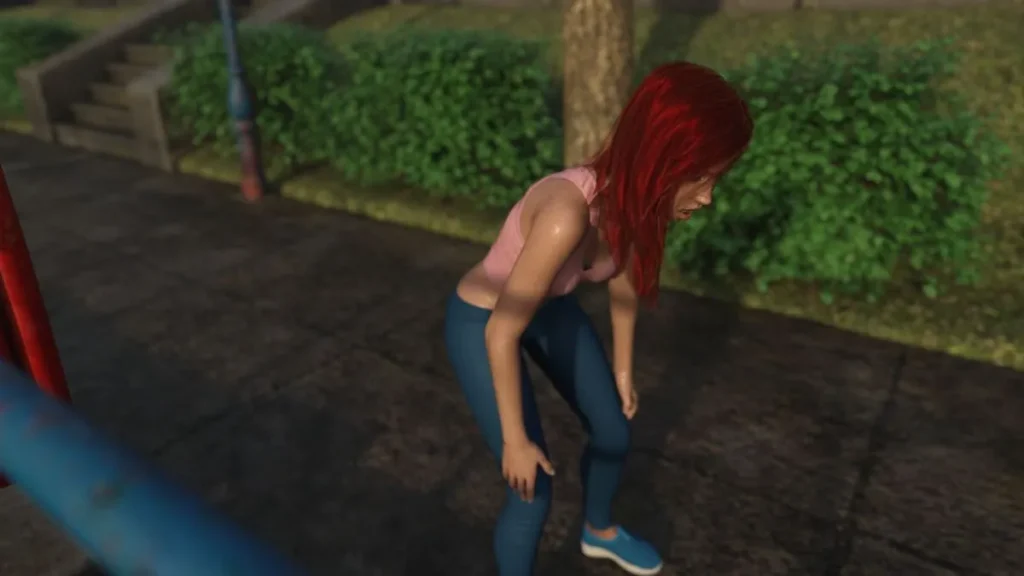
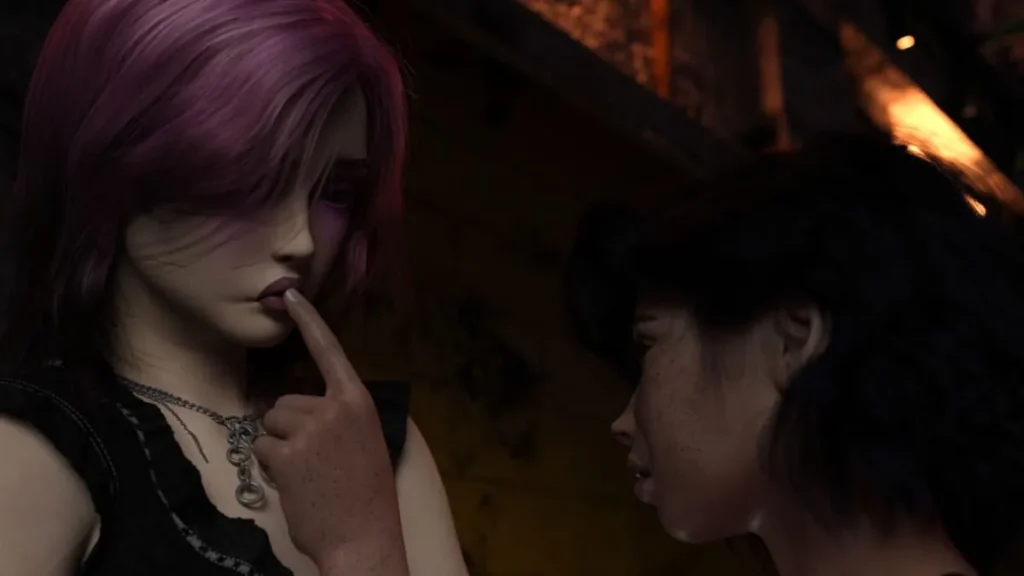
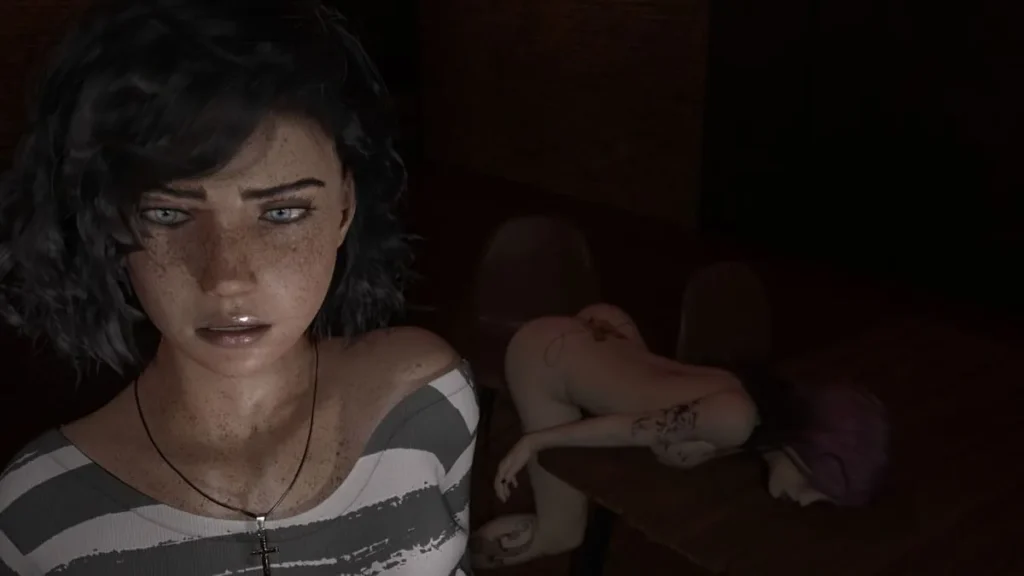


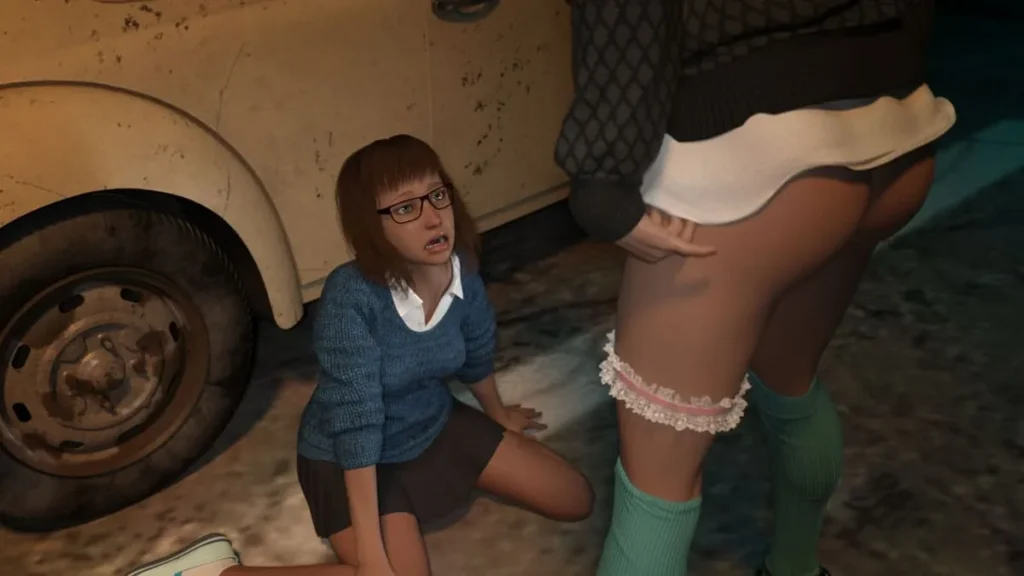
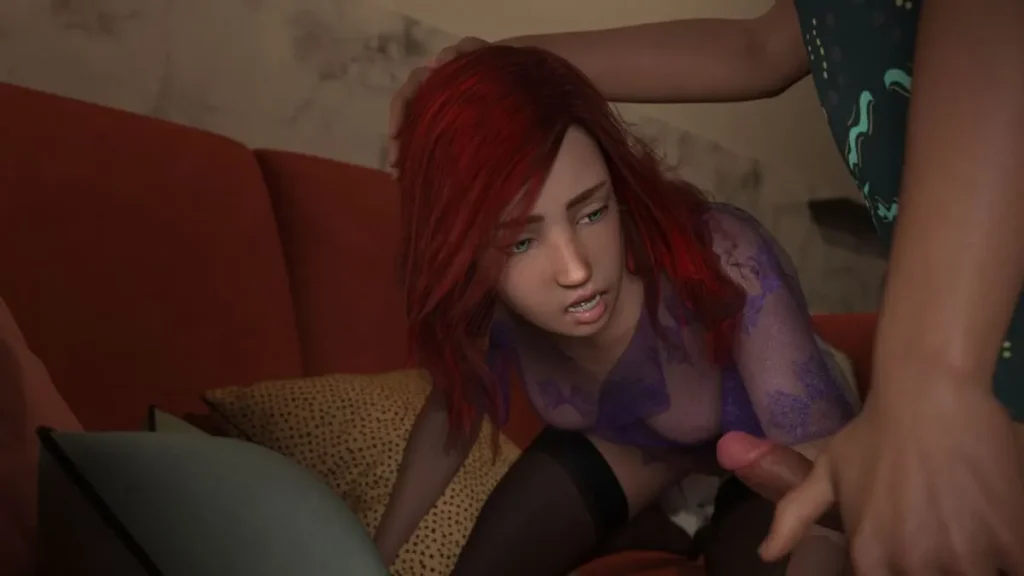
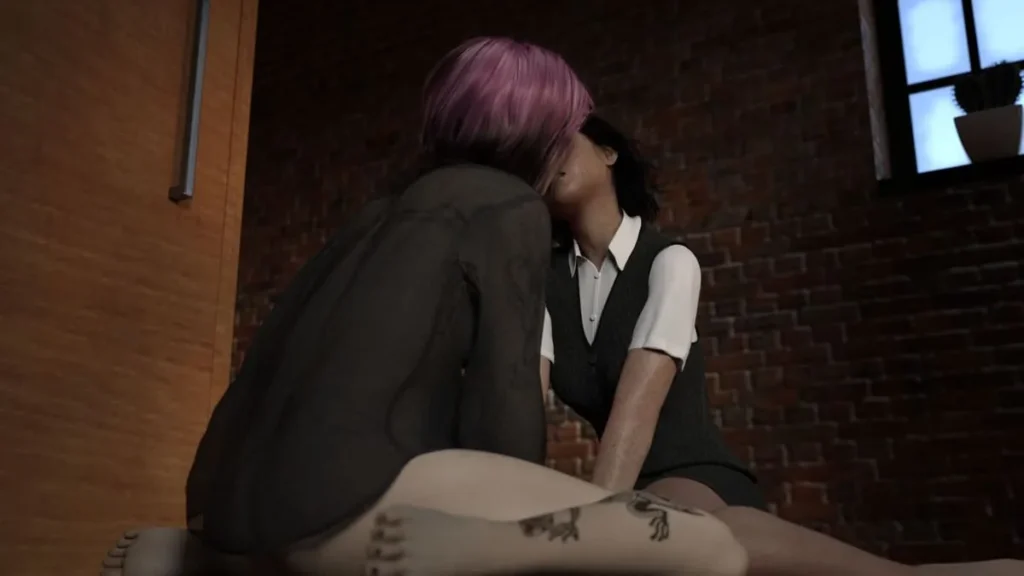
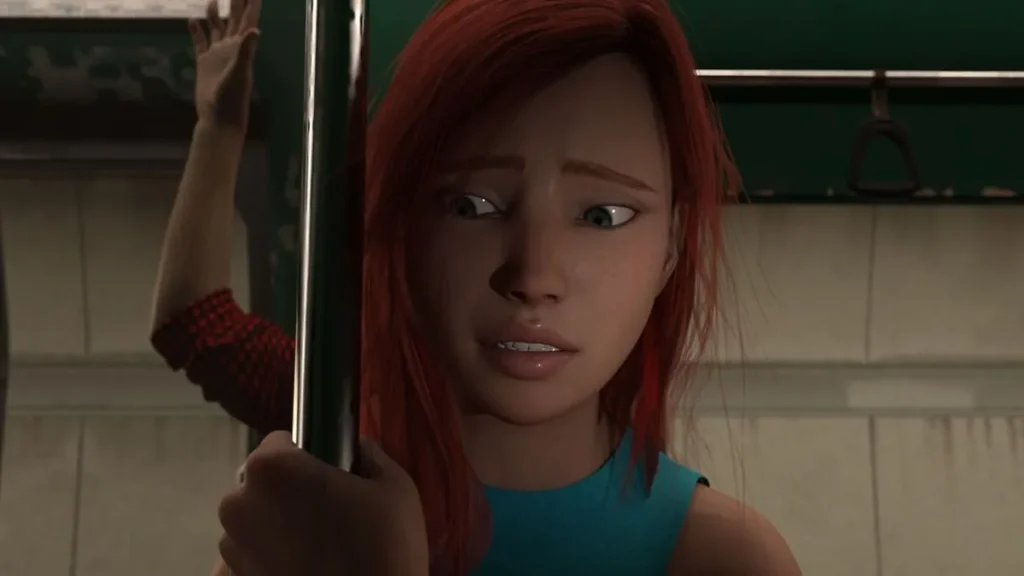
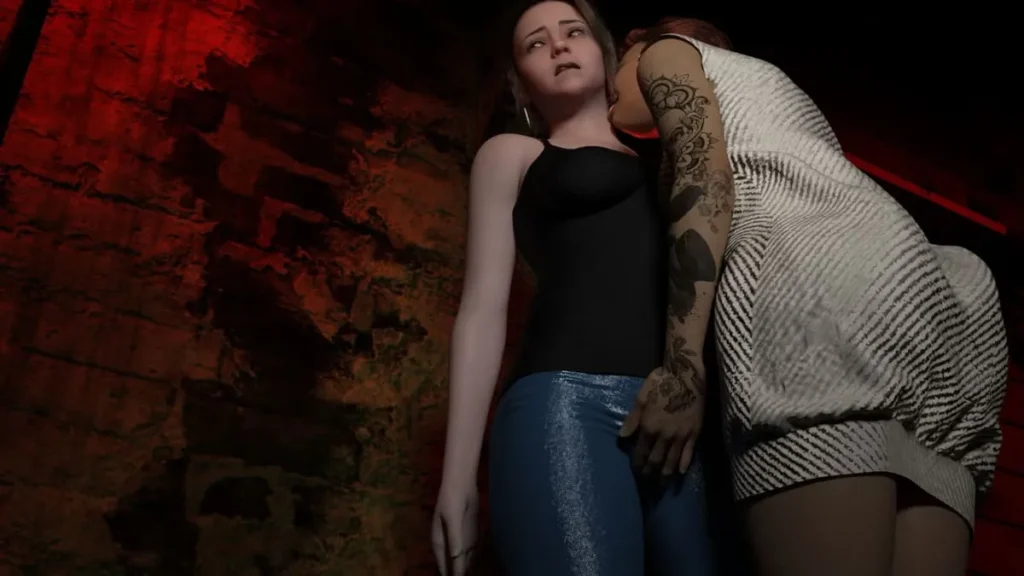
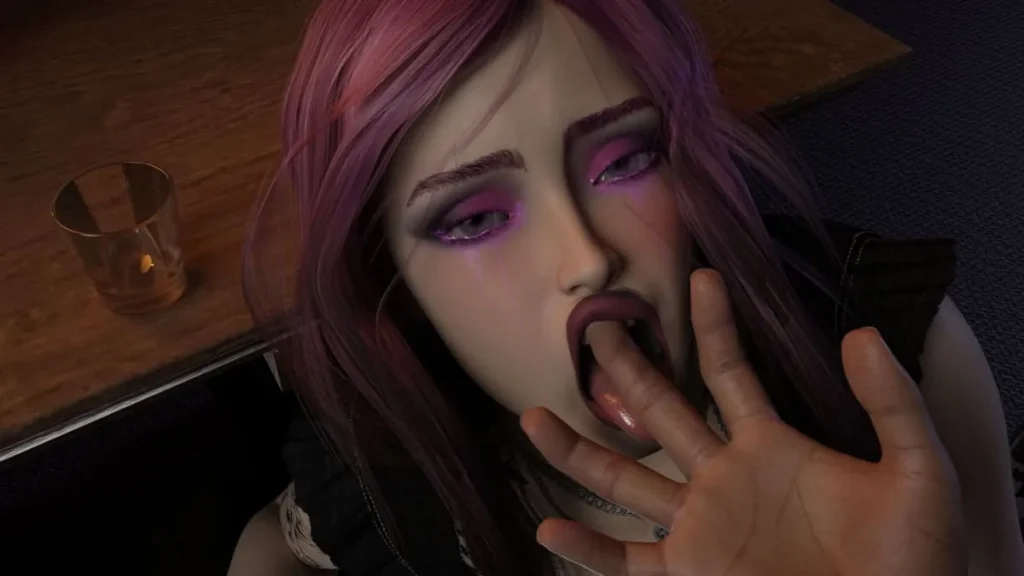
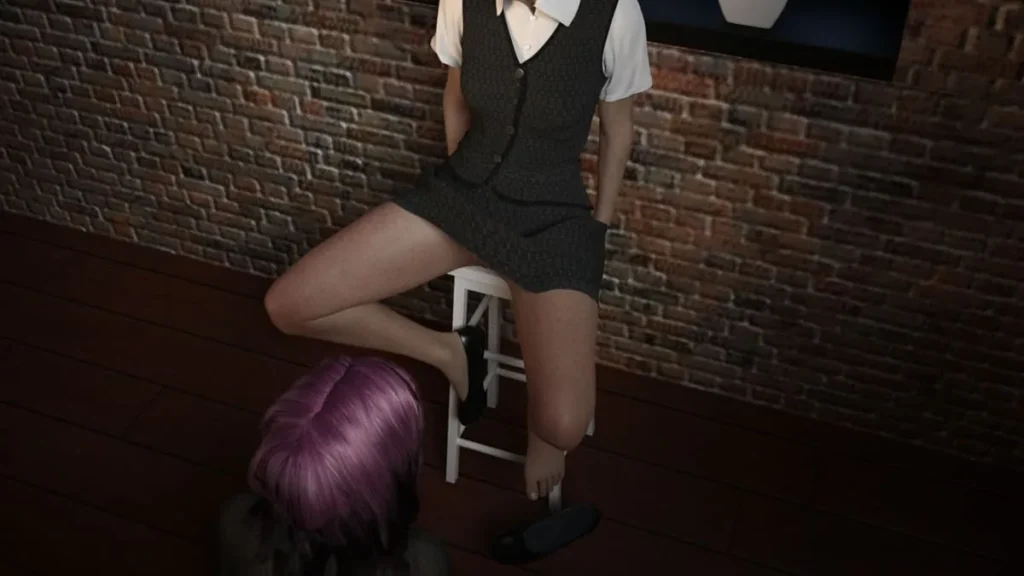
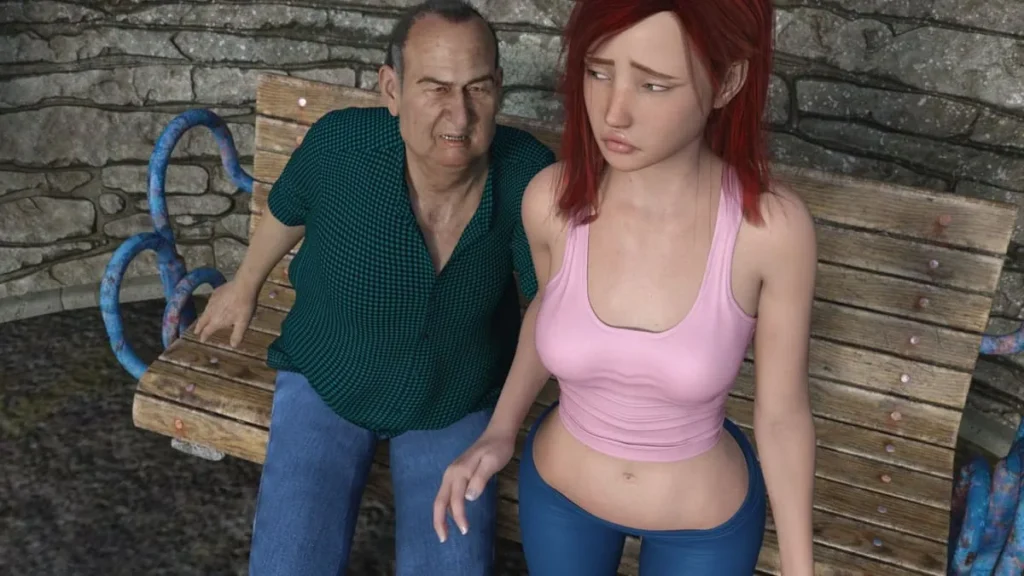
The Theater of Sinners review
Dive into the twisted narrative of humiliation and choice-driven corruption
Imagine stumbling into a shadowy theater where every choice unleashes a cascade of humiliation, corruption, and raw desire. That’s The Theater of Sinners, the gripping Ren’Py visual novel from JustXThings that’s captivating players with its psychological depth and brutal storytelling. In this Theater of Sinners guide, you’ll uncover the game’s core premise: following protagonists like Paula and Rebecca through a world of moral ambiguity, BDSM dynamics, and branching paths. I first loaded it up late one night, expecting light thrills, but two hours in, my decisions had spiraled into intense, unforgettable scenes. Whether you’re chasing the Theater of Sinners storyline or its explicit encounters, this post breaks it all down to help you navigate its dark allure.
What Makes The Theater of Sinners Uniquely Addictive?
I remember my first night in the Grand Théâtre des Ombres. The screen was dark, the music a low, unsettling hum. I clicked to start, thinking I was just another player in another Ren’Py decision game. An hour later, I realized I was holding my breath, my cursor hovering over a choice that felt less like a game option and more like signing a contract with my own discomfort. That’s the immediate, visceral hook of The Theater of Sinners. It doesn’t just tell you a story; it makes you complicit in its unfolding corrosion. 😰
So, what is it about this particular psychological horror visual novel that digs its claws in so deep and refuses to let go? It’s a perfect, uncomfortable storm of premise, mechanics, and raw human psychology. Let’s pull back the velvet curtain and see what makes this experience so uniquely—and disturbingly—addictive.
Unpacking the Core Premise and Setting
At its heart, The Theater of Sinners premise is a masterclass in grounded darkness. You are not whisked away to a fantastical land of monsters and magic. Instead, you are ushered into the grim, rain-slicked streets and crumbling interiors of a world that feels painfully real. The theater itself is a metaphor—a stage where broken lives perform their tragedies, and you hold the director’s notes.
The narrative braids together the lives of four protagonists, each a portrait of vulnerability and resilience. You’ll guide Paula, the daughter of a powerful figure, as she navigates the brutal social hierarchy of high school, targeted by delinquents who sense her privileged isolation. Then there’s Rebecca, whose home life is a prison constructed by an addict mother and a violently abusive stepfather. Their stories, and those of the other characters, aren’t about supernatural evil, but the all-too-human kinds: systemic abuse, crushing humiliation, and the desperate choices people make to survive or seize power. 🌧️
This is the genius of The Theater of Sinners. The moral ambiguity in games is often a selling point, but here it’s the very fabric of the universe. There are no clear-cut heroes or villains, only sinners of varying degrees. A character you help in one moment might become your tormentor in the next, driven by their own pain and trauma. The Theater of Sinners premise forces you to ask not “How do I win?” but “What am I willing to become to get through this?” This grey morality is what transforms it from a simple story into an immersive, reflective experience.
How Choice-Driven Mechanics Shape Your Experience
Understanding how Theater of Sinners works is key to unlocking its depth. This isn’t a linear novel where you just click through text. It’s a complex, reactive system where every whisper of a decision echoes through the entire playthrough.
The core of the Theater of Sinners mechanics is a deceptively simple stat system. Your choices don’t just lead to Branch A or Branch B; they quietly raise or lower hidden attributes like Confidence, Submissiveness, Corruption, or Compassion. These stats are the invisible gears of the narrative, unlocking or locking entire scenes, dialogues, and outcomes. A seemingly insignificant choice to talk back to a bully might boost a Confidence stat just enough to unlock a defiant escape route three chapters later.
Here’s a breakdown of the key systems that make the Theater of Sinners branching paths so vast:
| Mechanic | How It Works | Impact on Your Play |
|---|---|---|
| Decision-Based Stats | Dialogue and action choices raise hidden attributes (e.g., Pride, Fear, Lust). | Stats act as keys, opening or closing future narrative doors and altering character relationships. |
| Non-Linear Event Order | You can often tackle events for different characters in the order you choose. | This allows for strategic play. Completing events that boost certain stats first can lead to better outcomes in later, tougher scenes. |
| Branching Narrative Outcomes | Major plot junctions split the story based on your accumulated stats and key choices. | Creates radically different endings and character arcs. One playthrough can end in triumph, another in utter ruin. |
| Flashbacks & Milestones | Reaching certain points or making specific choices unlocks past memories or new content blocks. | Deepens character motivation and provides crucial context, making the story feel layered and earned. |
My biggest piece of practical advice? Save often, and save-scum shamelessly. This is not cheating; it’s research. The Theater of Sinners branching paths are often hidden behind subtle triggers. Seeing how a single altered sentence changes an entire scene’s tone is a core part of the experience. Also, savor the dialogue. A throwaway line about a character’s past might be the subtle hint you need to understand which stat to boost for a better outcome later.
Pro Tip: On a first playthrough, try to focus on events that seem to raise core survival stats like Confidence or Cunning. It can unlock more options and help you weather the game’s darker turns.
Why the Psychological Horror Hooks You In
The true terror in The Theater of Sinners doesn’t jump from the shadows. It seeps. This is a psychological horror visual novel in the purest sense. The horror isn’t in gore or jump scares (though tension is high), but in the slow unraveling of a person, the chilling normalization of degradation, and the haunting question of whether corruption is a choice or an inevitability.
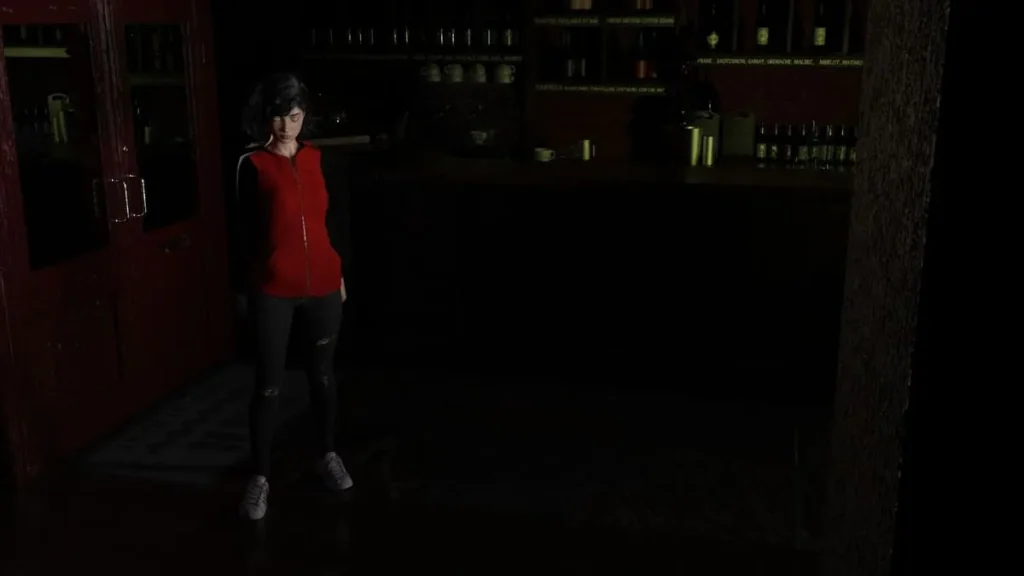
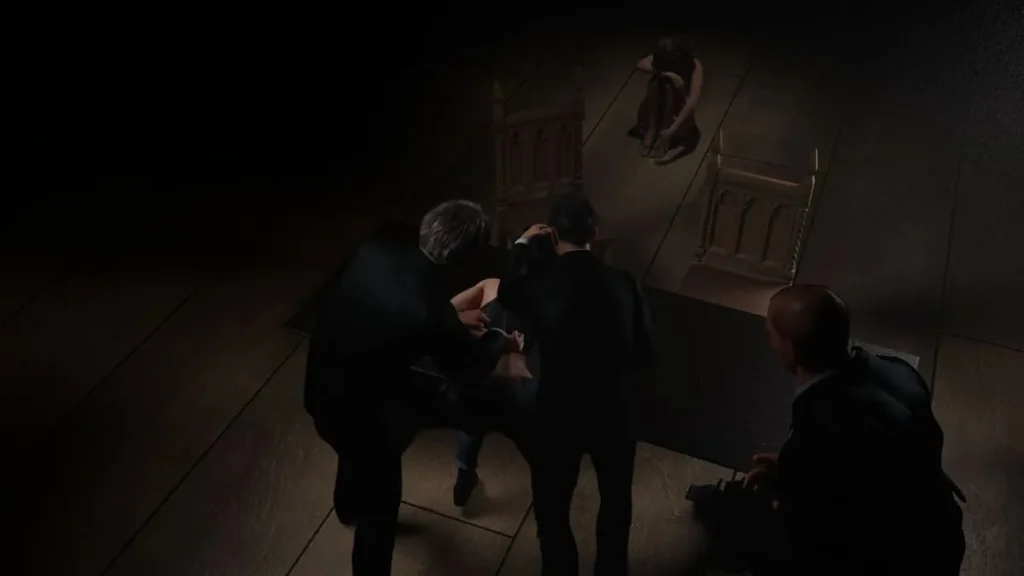
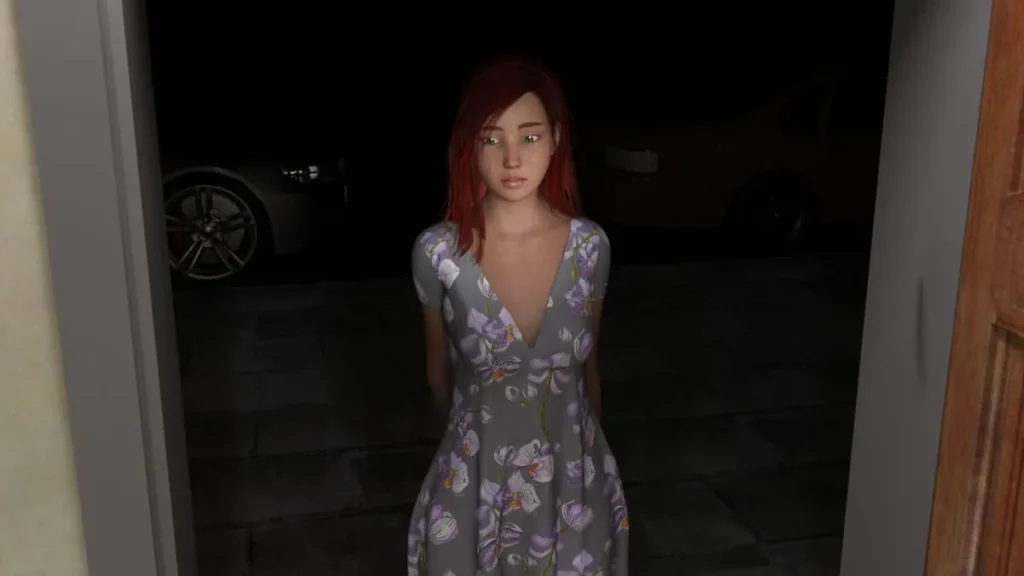
The atmosphere is thick with a sense of dread. The art style—especially the hyper-realistic, expressive character sprites—plays a huge role. A flicker of fear in a character’s eyes, a slight tremble in a smile, a look of heartbreaking resignation… these details feel drawn from real human experience. As one of the developers has noted, the focus is on “telling a dark story with difficult themes,” aiming for a realism that makes the emotional impact land with terrible force. This commitment to emotional authenticity is what separates it from simpler titles.
This feeds directly into the game’s powerful themes of the cycle of pain, guilt, and the elusive chance for redemption. You will see characters who were victims become perpetrators, not out of cartoonish evil, but because it’s the only behavior they’ve ever known. The moral ambiguity in games is rarely this poignant or painful. You’re constantly wrestling with your own decisions: Am I protecting this character, or am I molding them into something harder and crueler to survive? Is this a path to strength, or just a different kind of damnation?
This is why the game is so addictive. 🪤 The consequences feel real and weighty. You become invested not in achieving a “good ending,” but in understanding the ripples of your actions. It blends a dark, almost gothic fantasy of horror with sharp, insightful human psychology. You’re not just watching a tragedy; you’re conducting it, note by terrible note. And in that uncomfortable power lies a deeply compelling, unforgettable hook that will have you returning to the Grand Théâtre des Ombres, again and again, to see just how differently the play can end.
The Theater of Sinners stands out as a masterful blend of narrative depth, player agency, and unflinching exploration of human darkness, from Paula’s descent into deviance to Rebecca’s battle with her past. My own dives into its branches left me rethinking choices long after closing the game, proving its lasting pull. If you’re drawn to stories where every decision echoes with consequence, grab the latest 0.3 ALPHA 1 version from JustXThings on itch.io and step into the shadows. Share your wildest paths in the comments—what fate did you forge for these sinners?